United Kingdom
 Deutschland
 France
 Belgium
 Bulgaria
 Česká Republika
 Croatia
 Denmark
 España
 Finland
 Greece
 Hungary
 Iceland
 Ireland
 Italia
 Kazakhstan
 Latvia
 Lithuania
 Luxembourg
 Malta
Malta
 Nederland
 Norway
 Österreich
 Polska
 Portugal
 Romania
 Schweiz
 Slovakia
 Slovenia
 Sweden
 United States
 Canada
 Argentina
 Brasil
 Chile
Chile
 Colombia
 Costa Rica
 Cuba
Cuba
 Dominican Republic
 Ecuador
 El Salvador
 Guatemala
 Jamaica
 México
.svg.png?width=24&name=Flag_of_Peru_(state).svg.png) Peru
Peru
 Trinidad and Tobago
.png?width=24&name=Flag_of_Uruguay_(1828-1830).png) Uruguay
Uruguay
 Australia
 中国
中国
 中国香港
中国香港
 India
India
 Indonesia
 日本
日本
 대한민국
대한민국
 Malaysia
 New Zealand
 Pakistan
 Philippines
 Qatar
Qatar
 Saudi Arabia
 Singapore
 Taiwan
 Thailand
 Türkiye
 UAE
UAE
 Vietnam
 Algeria
 Egypt
Egypt
 Kenya
Kenya
 Mauritius
 Morocco
 South Africa
 Tunisia

"In terms of safety, what the MasterMover brings is exactly what we wanted to do... it removes the manual handling piece in its entirety and therefore reduces the risk of those musculoskeletal injuries."

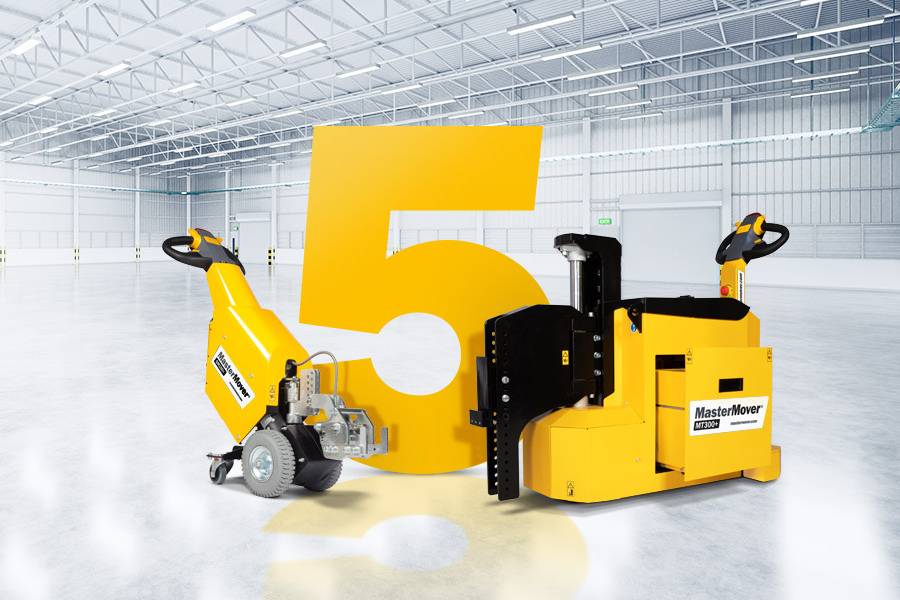
An electric tug lets a single operator connect to a wheeled load and move it without having to wait for a licensed forklift driver or needing multiple staff to dedicate time to manually move loads.
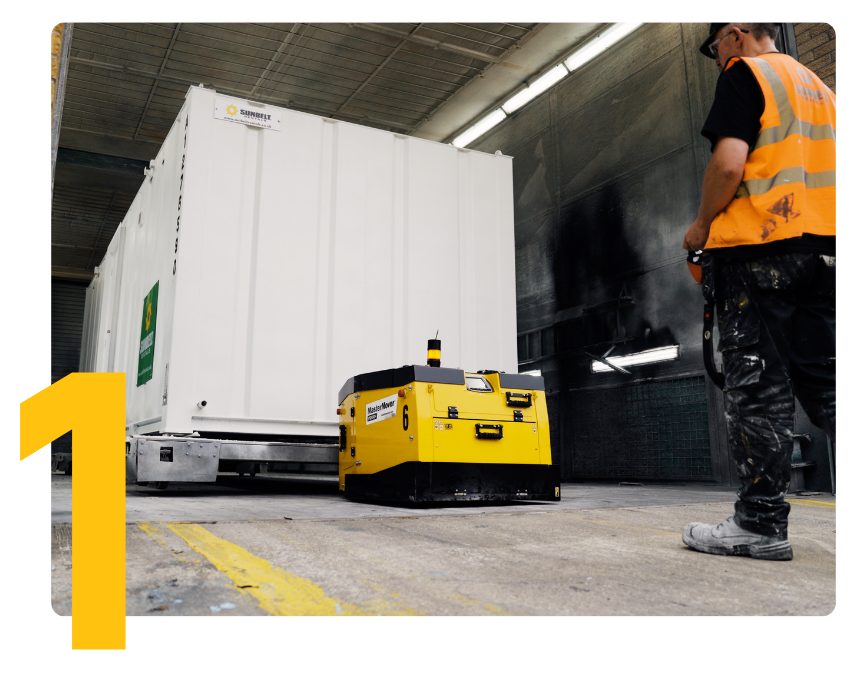
With MasterMover electric tugs, a single operator can move up to 300,000kg in challenging or congested industrial environments. So now the staff who used to be tied up in a multi-person move are free to focus on higher-value tasks.
Sunbelt Rentals reduced manpower for trailer moving tasks by 75% with our PowerSteered tugs, also boosting efficiency by 300%.
![Electric Tug Essentials Benefits_Manchester Airport [Right]](https://www.mastermover.com/hs-fs/hubfs/Electric%20Tug%20Essentials%20Benefits_Manchester%20Airport%20%5BRight%5D.png?width=952&height=674&name=Electric%20Tug%20Essentials%20Benefits_Manchester%20Airport%20%5BRight%5D.png)
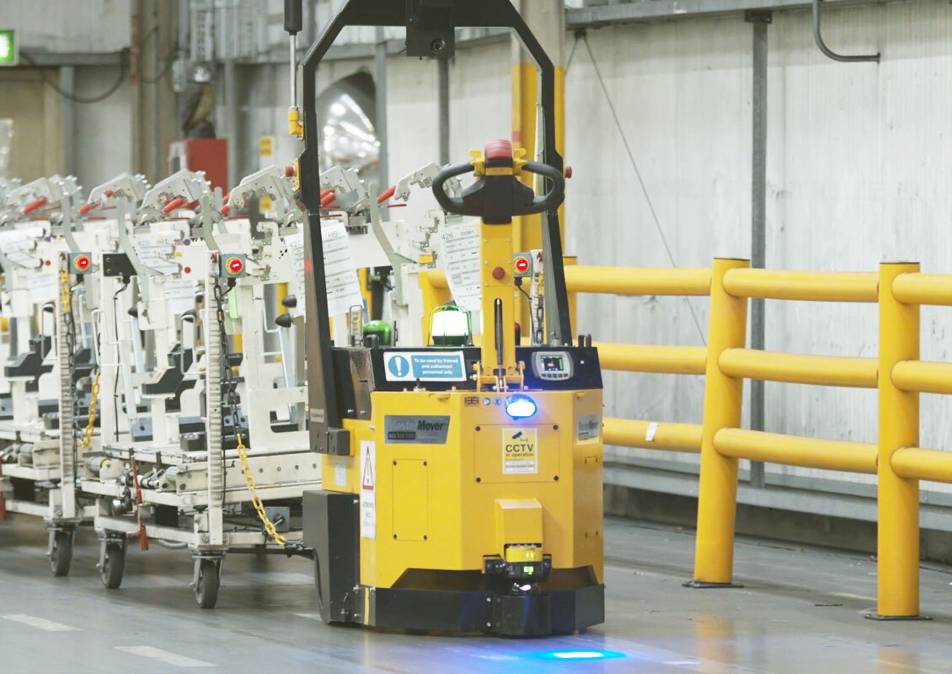
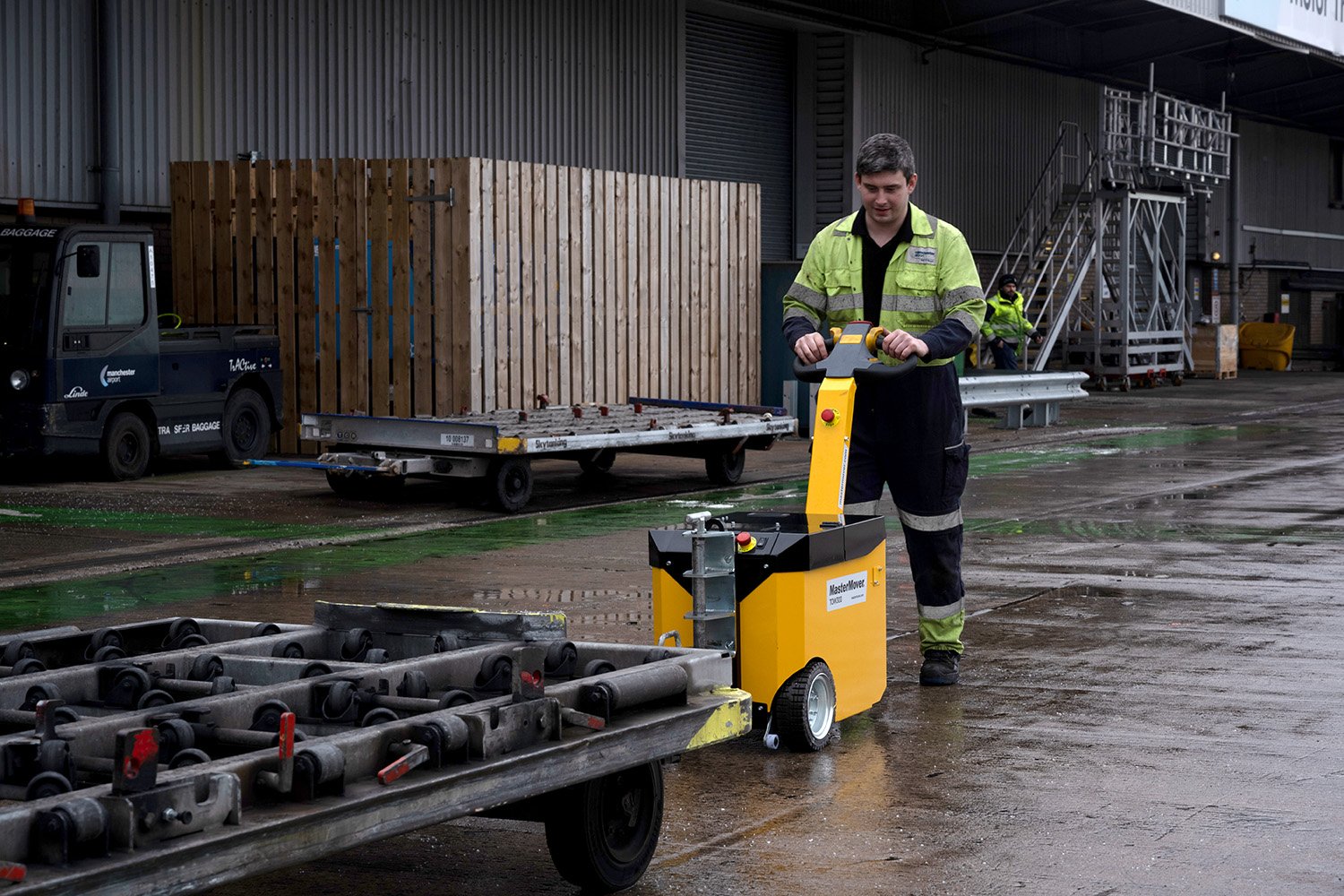
Rather than a person pushing, pulling, or steering heavy loads by hand, electric tugs take all the strain. Manual handling accounts for 17% of all non-fatal workplace injuries in the UK (HSE, 2024). It's a far bigger safety issue than most businesses realise and is what electric tugs are built to eliminate.
Creating a secure, unbreakable connection to the load, our electric tugs reduce the risk of trapped limbs and toppling loads as well as the repetitive strain that leads to musculoskeletal disorders.
Manchester Airport Group's Motor Transport team reduced lost-time incidents by 100% after switching to our MasterTow electric tugs to move heavy baggage trailers through workshops, also boosting productivity by 200%.
![Electric Tug Essentials Benefits_Pharmaceutical [Left]](https://www.mastermover.com/hs-fs/hubfs/Electric%20Tug%20Essentials%20Benefits_Pharmaceutical%20%5BLeft%5D.png?width=952&height=674&name=Electric%20Tug%20Essentials%20Benefits_Pharmaceutical%20%5BLeft%5D.png)
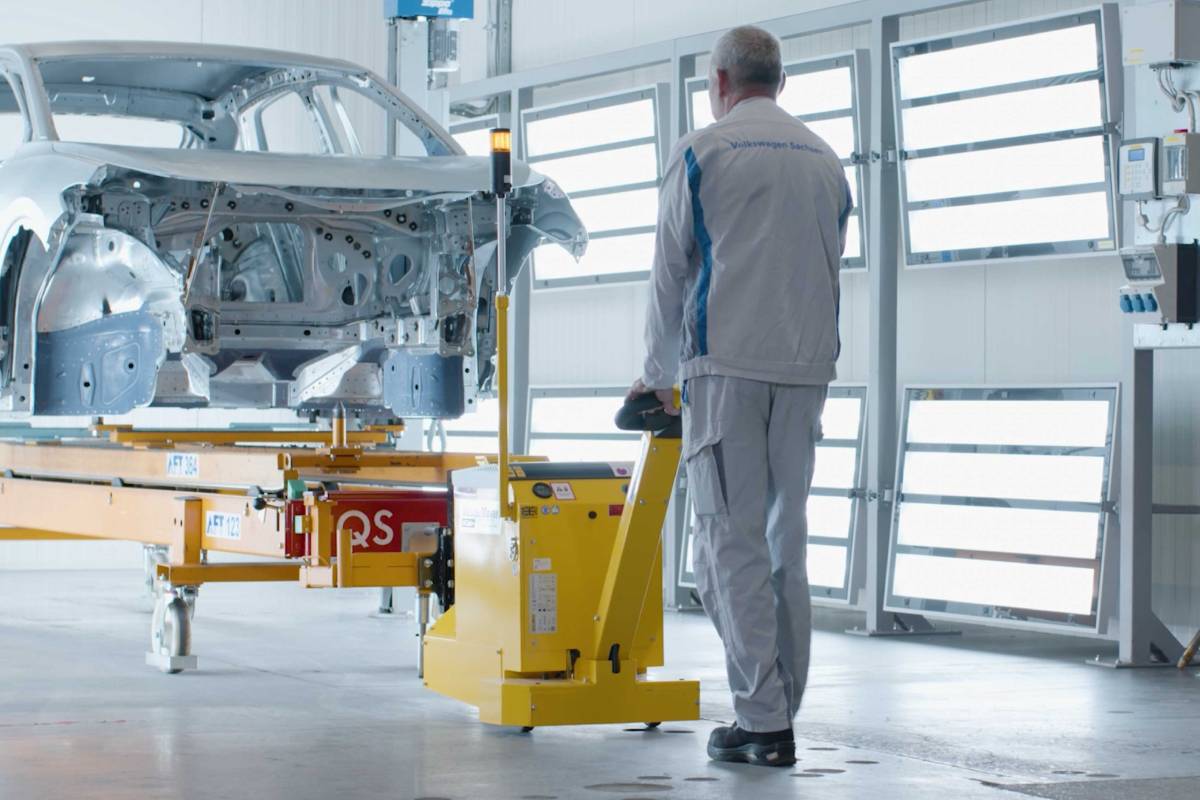
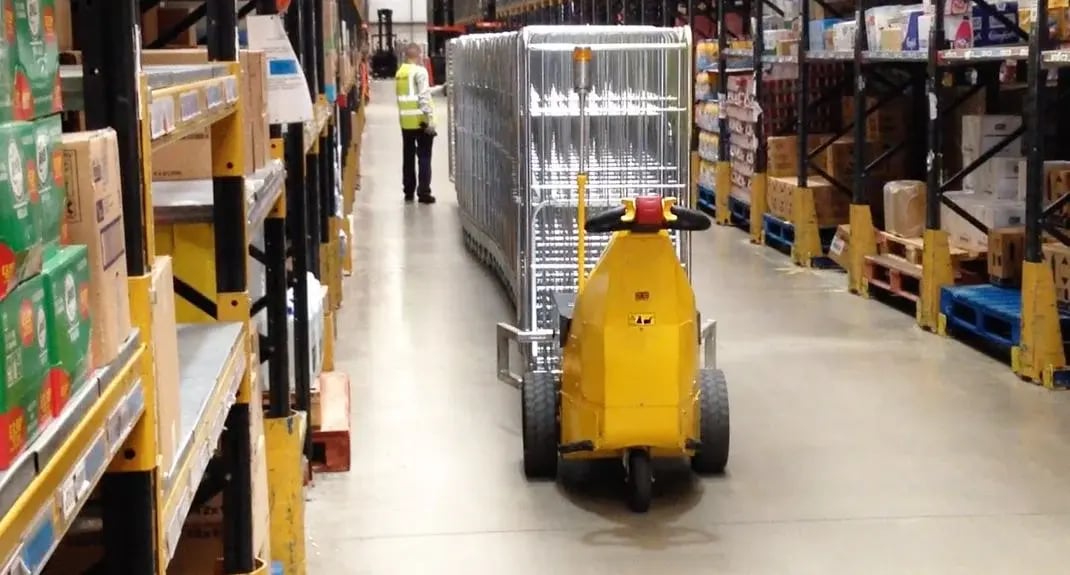
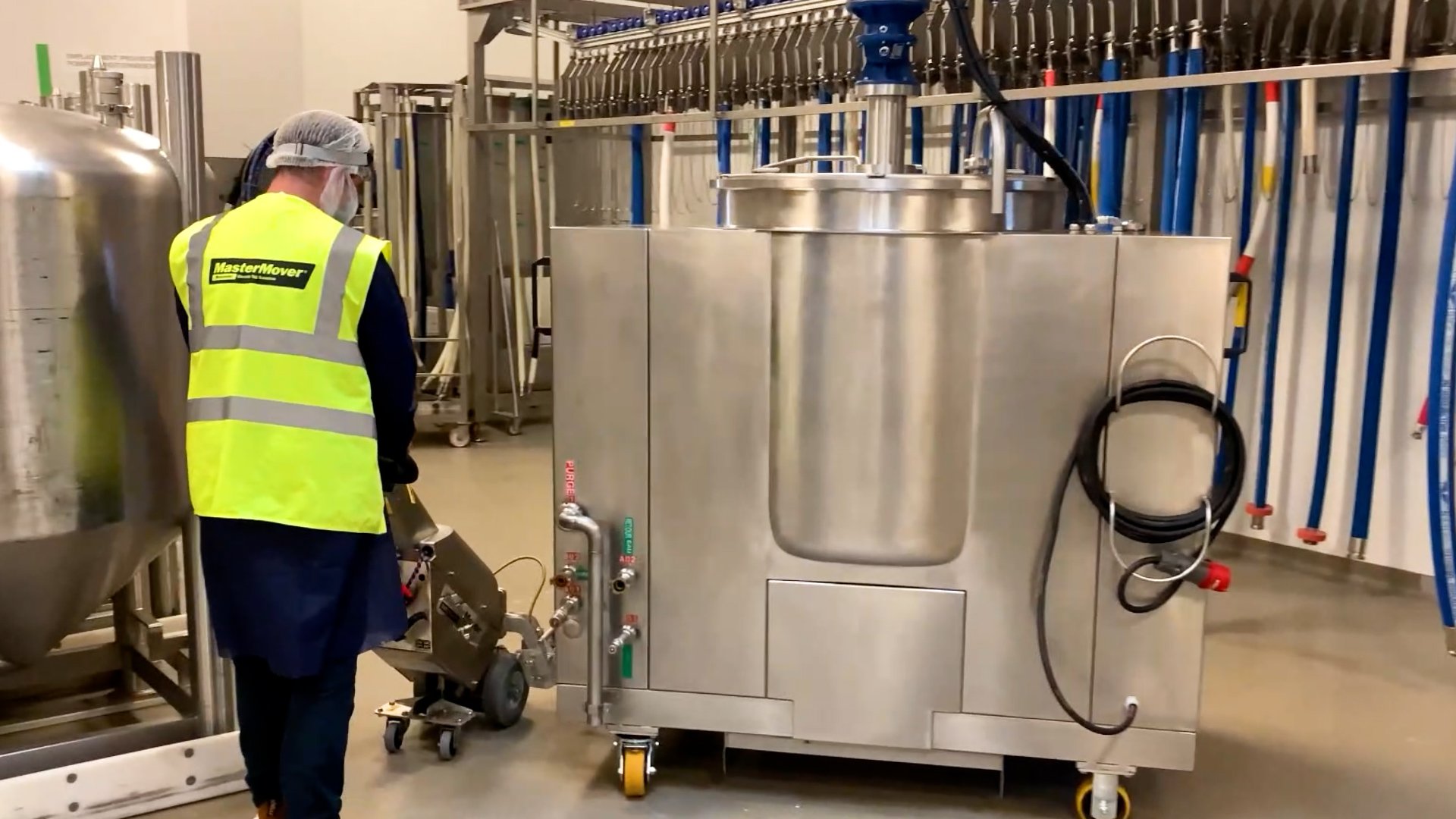
Traditional handling equipment or fixed infrastructure, such as forklifts or overhead cranes, lock you into a fixed layout. MasterMover electric tugs do the opposite; scaling up or down with demand and adapting to changing layouts whilst navigating congested pedestrian sites.
A small turning circle and compact footprint allow electric tugs to work in spaces where forklifts and larger handling equipment can't safely operate, such as narrow aisles, tight corners, and high-footfall areas - ideal for pharmaceutical manufacturing, retail, and logistics environments.
"In terms of safety, what the MasterMover brings is exactly what we wanted to do... it removes the manual handling piece in its entirety and therefore reduces the risk of those musculoskeletal injuries."

"It's a big manpower saving. We go from having three or four people involved... to having that down to one person."
/Images/sunbelt-rentals-1223-mmsb.jpg?width=6720&height=4480&name=sunbelt-rentals-1223-mmsb.jpg)

"We have several safety roadmaps, and that's really part of our safety culture for zero harm. As part of that, one of the key things is to try and reduce forklift truck movement and segregate those from our team members."
![Electric Tug Essentials Benefits_Savings [Right] (1)](https://www.mastermover.com/hs-fs/hubfs/Electric%20Tug%20Essentials%20Benefits_Savings%20%5BRight%5D%20(1).png?width=952&height=674&name=Electric%20Tug%20Essentials%20Benefits_Savings%20%5BRight%5D%20(1).png)
Electric tugs save money on three fronts: capital investment, training costs, and maintenance. Fixed equipment like overhead cranes is expensive to move or reconfigure, and maintaining a fleet of forklifts comes with ongoing costs from purchase, servicing, and licensed-operator training.
An electric tug costs a fraction of the price to purchase, requires no operator licence, and has low maintenance requirements - so the savings compound over the life of the machine.
![Electric Tug Essentials Benefits_Emissions [Right] (1)](https://www.mastermover.com/hs-fs/hubfs/Electric%20Tug%20Essentials%20Benefits_Emissions%20%5BRight%5D%20(1).png?width=952&height=674&name=Electric%20Tug%20Essentials%20Benefits_Emissions%20%5BRight%5D%20(1).png)
Unlike alternative methods which may run on fuel, there are no harmful diesel fumes with a battery powered electric tug or tow tug. A MasterMover is flexible enough to be used inside and out and, because there are no harmful exhaust gases, no additional ventilation is required.
Low emission, low noise load moving methods are a win-win for everyone. Not only is this good for the environment, it’s great for staff too.
Terex switched to our remote controlled PowerSteered electric tugs to create forklift-free zones in their Materials Processing division, minimising diesel emissions on site. Our customer in Germany was able to cut 11,000kg of CO2 emissions each year from their pre-casting facility by replacing diesel-powered equipment with our electric tugs.
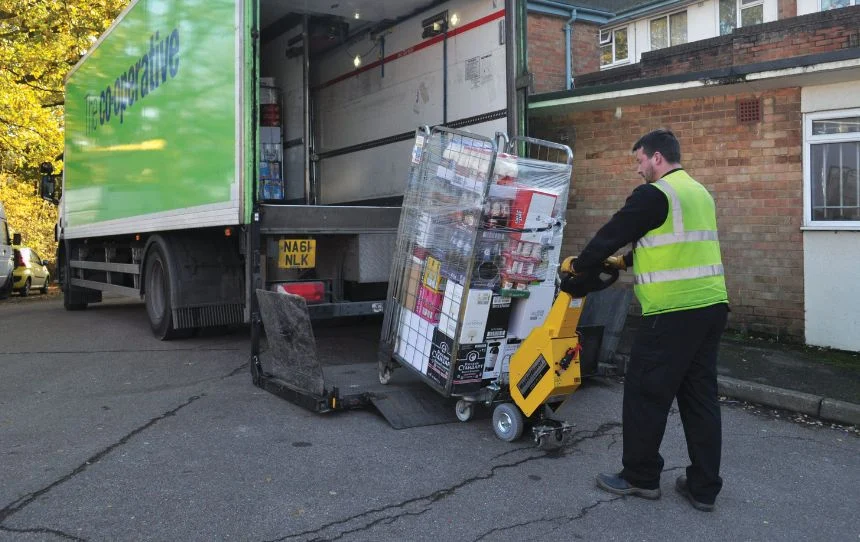
/Images/PS3000+%20MultiLink_PowerSteered_Energy_ITM%20Power_Moving%2044000kg%20Hydrogen%20Electrolyser%20Once%20Complete_Portrait.jpeg?width=2000&height=1500&name=PS3000+%20MultiLink_PowerSteered_Energy_ITM%20Power_Moving%2044000kg%20Hydrogen%20Electrolyser%20Once%20Complete_Portrait.jpeg)