Understanding manual handling weight limits
Manual Handling
Manual handling injuries are a leading cause of workplace accidents. This MasterMover guide covers safe weight limits for moving loads by hand, how recommended limits differ for men and women, and why following official guidance is key to reducing risk.
What is the manual handling weight limit in the UK?
Manual handling weight limits refer to the maximum amount of weight that a person can safely move. These limits aim to protect workers from overexertion, strains, sprains, and other musculoskeletal injuries.
There is no single legal weight limit for manual handling in the UK. Instead, the Health and Safety Executive (HSE) publishes guideline figures – most commonly 25kg for men and 16kg for women – used as a risk filter to flag when a task needs closer assessment. These figures only apply under specific conditions: the load held close to the body, lifted between knuckle and shoulder height, and not lifted repeatedly. The Manual Handling Operations Regulations 1992 (MHOR) require a task-by-task risk assessment instead of a fixed threshold.
Factors that reduce safe handling limits
Weight limits for manual handling can change based on factors like an individual’s ability, the task, and the available equipment. The weight limit can be influenced by a range of factors, including:
1. Movement requirements
Manual handling includes more than just lifting. Pushing, pulling, and stopping wheeled loads by hand also needs to be considered. Certain aspects of a movement such as positioning, pushing, stopping, pulling, lifting, placing, and lowering a heavy object, can all affect how much weight a person can safely move. Repetitive or awkward movements also reduce the weight an individual can move and are a significant risk factor that should be considered.
2. Individual capacity
Every individual has different physical abilities and limitations. Age, fitness level, medical history, and existing conditions determine the amount of weight someone can safely move. It's important to consider individual and take necessary precautions to minimise the risk of injury at work by assessing the task and utilising handling aids and material handling equipment where possible.
3. Lifting technique & posture
Where a load needs to be lifted, poor lifting techniques and posture can impact the weight an individual can lift or move. The HSE ‘Good Handling Techniques’ advises that to lift a load safely, you should use both hands, position the load in front of your body and avoid twisting.
4. Load & environment
The shape, size, and weight distribution of the object or load being moved affect how easily it can be handled. Awkwardly shaped or unbalanced loads can increase the risk of injury.Additionally, factors such as space constraints, floor conditions, and obstacles can all impact a worker's ability to move loads safely. The movement of loads up and down slopes requires significantly more effort and reduces the maximum weight an individual can move.
Your guide to manual handling
Manual handling
Explore our comprehensive manual handling resource hub — expertly curated materials designed to empower your team and prevent injuries, making your workplace safer and more efficient.
Is there a legal maximum weight for manual handling?
UK law does not set a legal maximum lifting weight. MHOR requires employers to avoid hazardous manual handling where possible, and to assess and reduce the risk of any handling that can't be avoided, taking a risk-based approach rather than a weight-based one. Treating 25kg as the legal limit is a common misunderstanding, and one that can leave a risk assessment looking incomplete if it's the only justification used.
-
What is the manual handling limit for men?
-
What is the manual handling limit for women?
-
Is the manual handling weight limit affected by lifting height?
What is the manual handling limit for men?
The HSE's guideline figure for men is 25kg, lifted close to the body between knuckle and shoulder height in otherwise ideal conditions. This drops to around 20kg at knuckle height with arms extended, and as low as 10kg at or above shoulder height.
What is the manual handling limit for women?
The HSE's guideline figure for women is 16kg, under the same ideal conditions of close to the body, knuckle-to-shoulder height. This reduces to around 13kg at knuckle height with extended arms, and to roughly 7kg at shoulder height and above.
Is the manual handling weight limit affected by lifting height?
Lifting height is one of the biggest factors. The HSE's guidance divides the lifting zone into bands (below knee, knee-to-knuckle, knuckle-to-shoulder, shoulder-to-above-head), with the safe weight dropping the further a load moves from waist height.
A load that's safe to lift from a knuckle-height shelf may not be safe to lift onto a shoulder-height one; if a task involves moving between zones, the lower figure applies for the whole task.
What happens if a manual handling weight limit is exceeded?
Exceeding the guideline figures doesn't automatically breach the law, but it's a strong signal that the task needs a documented risk assessment and if one hasn't been completed, that's where liability risk sits for an employer. Injuries from handling loads above the recommended weight are a common basis for workplace injury claims, with compensation for severe back injuries running into six figures in serious cases (Judicial College Guidelines, used by UK courts to value personal injury claims).
Safe manual handling tips
Weight limits are not the only factors determining safe manual handling. Pushing and pulling forces can also impact the weight an individual can safely handle. While there is no specific limit to the distance a load can be pushed or pulled over, it’s important to note that repetitive movements or movements over longer distances increase the likelihood of musculoskeletal disorders.
Four tips to help you ensure safe handling operations...
-

Manual handling training
Employers should provide manual handling training on safe lifting and handling techniques. -

Risk assessment
Regularly assess the workplace and processes for potential manual handling risks. Implement measures to eliminate or minimise these risks and use material handling equipment where possible.
-

Material handling equipment
Use mechanical aids like trolleys, MasterMover electric tugs, and other material handling equipment to reduce the physical strain on workers and eliminate the need for manual handling.
-

Rotate tasks & responsibilities
Implement policies that rotate workers' tasks to avoid prolonged exposure to repetitive or strenuous manual handling activity.
How to reduce manual handling weight-limit risks
Setting and adhering to maximum weight limit guidelines can help keep staff safe and reduce the risk of injury; however, weight limits alone aren’t enough.
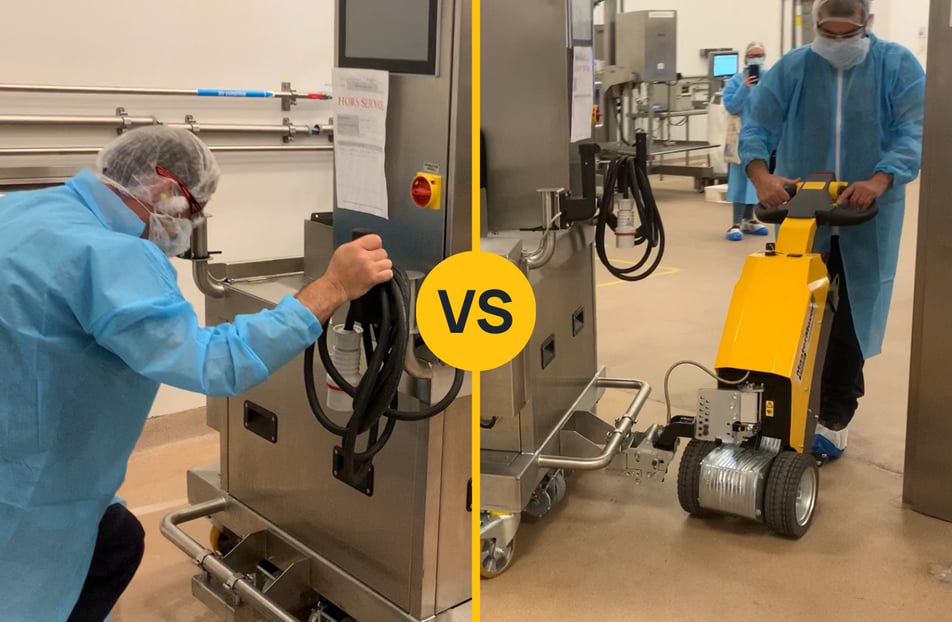
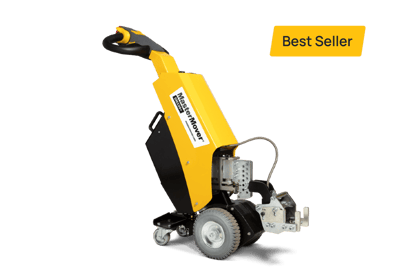
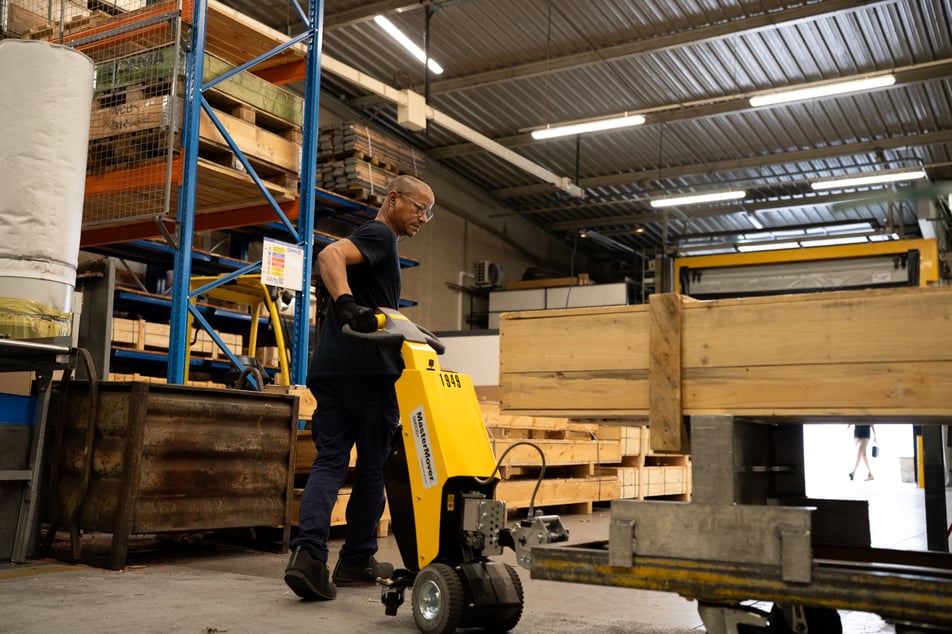
MasterMover electric tugs let a single operator move loads weighing anything up to 300,000kg without bearing the weight themselves, turning a task that would otherwise need a risk assessment and training into one with no manual handling weight limit to worry about.
Having a solid understanding of manual handling weight limits is essential for creating a safe and productive work environment. To ensure safe handling, you should use the recommended weight limits to inform your own processes whilst considering factors such as the task, frequency, and individual capabilities.
Manual handling aids
Manual handling aids play a crucial role in ensuring the safety and well-being of individuals involved in tasks that require lifting, carrying, or moving heavy objects. Manual handling aids should be used when tasks exceed an employee’s abilities, are repetitive or involve moving over rough terrain or slopes.
Manual handling aids, which can include items such as MasterMover electric tugs, trolleys, lifting belts, dollies, and hoists, not only reduce the risk of immediate injuries like strains and sprains but also contribute to long-term health by preventing chronic musculoskeletal issues. By promoting proper body mechanics and reducing the physical strain on workers, manual handling aids enhance productivity, decrease workplace accidents, and contribute to a more efficient and safe working environment, benefiting both staff and employers alike.
Simple & safe manual handling solutions
Our battery-powered electric tugs and tows are designed using the same guiding principles: dependable performance and safety built-in as standard.
SmartMover
Compact but powerful, the SmartMover is the ideal manual handling solution – trusted to improve safety across industries.
MasterTow
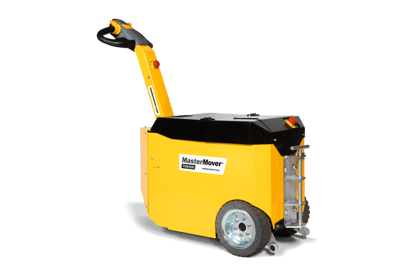
Drive safety and efficiency with our powerful electric tow tugs, designed to safely move loads of up to 20,000kg.
MasterTug
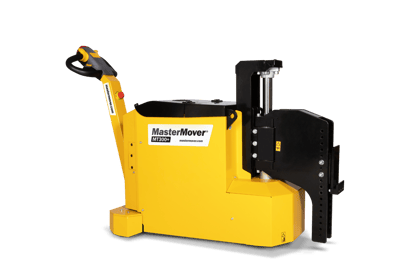
The MasterTug range allows a single pedestrian operator to easily push, pull and steer wheeled loads weighing up to 20,000kg.

Download our manual handling checklist
We made a simple checklist to help you assess handling processes and reduce the risk of manual handling injuries.
- Everything you need to know about manual handling risks
- Manual handling risk assessment checklist for your operations
- How to reduce the risk of a manual handling accident
- Common questions to ask when sourcing material handling equipment
FAQs: Your questions, answered
Yes. HSE guidance covers pushing and pulling separately from lifting, with its own figures: around 20kg for men and 15kg for women to start a wheeled load moving, dropping to roughly 10kg and 7kg to keep it moving. These figures assume good conditions underfoot; slopes, poor flooring, or long distances reduce them further.
Young workers (under 18) and new or expectant mothers are treated as higher-risk groups under UK health and safety law, and HSE guidance recommends more cautious weight limits for both, there isn't an alternative figure but a lower threshold for triggering a full risk assessment. Employers have a specific duty to assess these risks individually rather than applying the standard 25kg/16kg guideline.
Yes, significantly. The 25kg/16kg guideline figures assume infrequent lifting and repeating a lift many times through a shift can reduce the safe weight by 50% or more, since cumulative strain on the same muscles and joints raises injury risk even when each individual lift looks safe in isolation.
Yes, and many do: company policies of 'no lifting above 20kg without assistance', for example, are common and can be stricter than the HSE guideline figures. What employers can't do is treat a company limit as a substitute for a proper MHOR risk assessment on tasks that need one.
An occasional, one-off lift close to the body can reasonably approach the 25kg/16kg guideline figures; a task repeated daily or several times a shift should be assessed well below them. Frequency is one of the four TILE factors HSE expects employers to weigh alongside the raw weight figure, not an afterthought.