Key takeaways

Forklifts are misused by design

Most forklift incidents happen because forklifts are routinely used for tasks they weren’t designed for, or in unsuitable area e.g. busy production halls with mixed equipment and pedestrians

Forklift-free operations improve safety

Forklift-free operations improve safety by separating lifting from horizontal transport, confining forklifts to defined zones and redesigning ground-level movement around MasterMover electric tugs.

Operational gains, not just safety gains

The gains are operational as well as safety-led: less floor congestion, no licensed operator dependency and more flexible production layouts. Business implementing forklift-free operations see improved efficiency and throughput by removing the downtime associated with single unit load transport and waiting for licensed drivers.

MasterMover: The forklift-free solution

MasterMover electric tugs move loads from a few hundred kilograms to 300,000kg and have been implemented by leading brands to improve safety and increase efficiency by over 300%. That's why we're the safe choice for forklift-free handling.

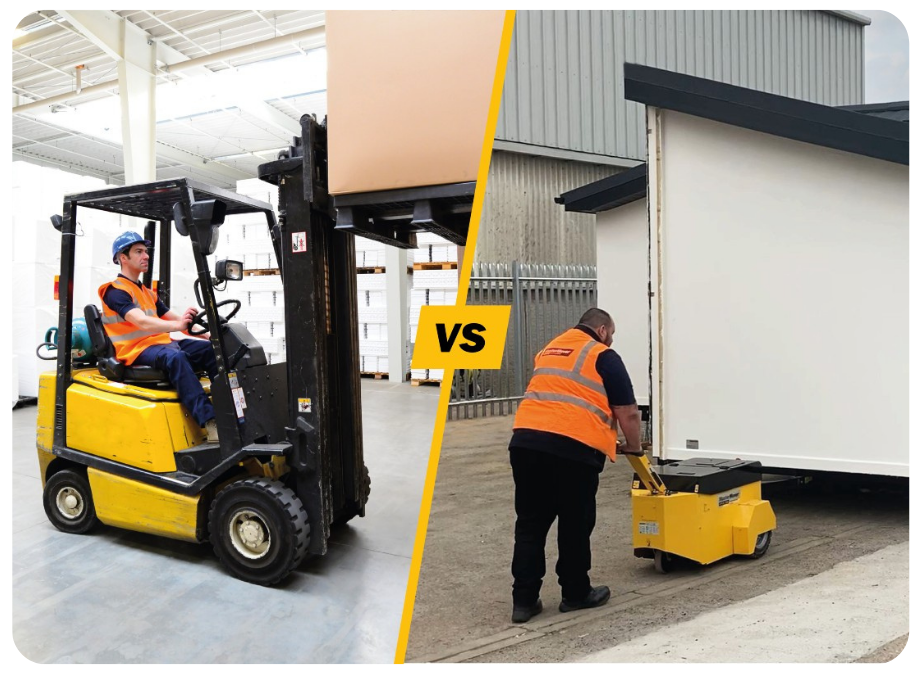
Forklift truck vs electric tugger comparison image

What is forklift-free?

Forklift-free is a strategy that separates lifting tasks from horizontal load transport. Rather than using forklifts as the default vehicle for all material movement, forklift-free operations confine forklifts to defined zones where lifting is genuinely required, such as racking, vehicle loading and stacking. Then, the approach involves redesigning transit routes around purpose-built electric tug solutions.

The logic is straightforward. Forklifts are engineered to lift, but in many manufacturing facilities, they're often used for shunting and shuttling loads around. For safety managers and operations leaders, a forklift-free strategy delivers a measurable reduction in pedestrian risk and improves material flow.
Forklift risks

WHAT FORKLIFT INJURY DATA SHOWS


Every year in Great Britain, forklift trucks seriously injure approximately 1,300 people, according to the HSE. They are involved in roughly one in four of all workplace transport accidents, making them one of the most consistent sources of risk on the factory floor.


Serious injuries per year (UK)

0

Involving forklift trucks

Forklifts were involved in

0 %

of workplace transport accidents

Preventable accidents

0 %

With better process design

THE PROBLEM WITH HOW FORKLIFTS ARE ACTUALLY  USED


In many accident cases, the forklift involved is simply operating in an environment it was never designed for. This is the central problem.

Despite being designed specifically for lifting, forklifts have become the default vehicle for almost every material movement task across manufacturing. When a site needs to move a trolley of components from goods-in to the production line, or shift a sub-assembly between production bays, the forklift is the default answer. It is available, operators are certified and nobody has formally decided it was the wrong tool for the job.

When forklifts become general transport vehicles rather than lifting equipment, that's when serious incidents start.

 A counterbalance forklift can easily weigh between three and five tonnes before any load is added. An operator sits elevated in a cab with a mast obstructing the forward view and it reverses frequently, often in spaces shared with pedestrians. When something goes wrong at the intersection of those characteristics, the outcome is severe.

RIDDOR data shows that 43% of lift truck incidents involve an impact with a third person, and of those, around 65% are pedestrians with no direct involvement in the truck's operation at all. 

Stock Manufacturing Metal Factory

Thousands of RIDDOR-reportable incidents annually

 Non-fatal lift truck accidents resulting in days away from work, restricted duties or job transfer are among the most significant contributors to workplace transport injury statistics in the UK.
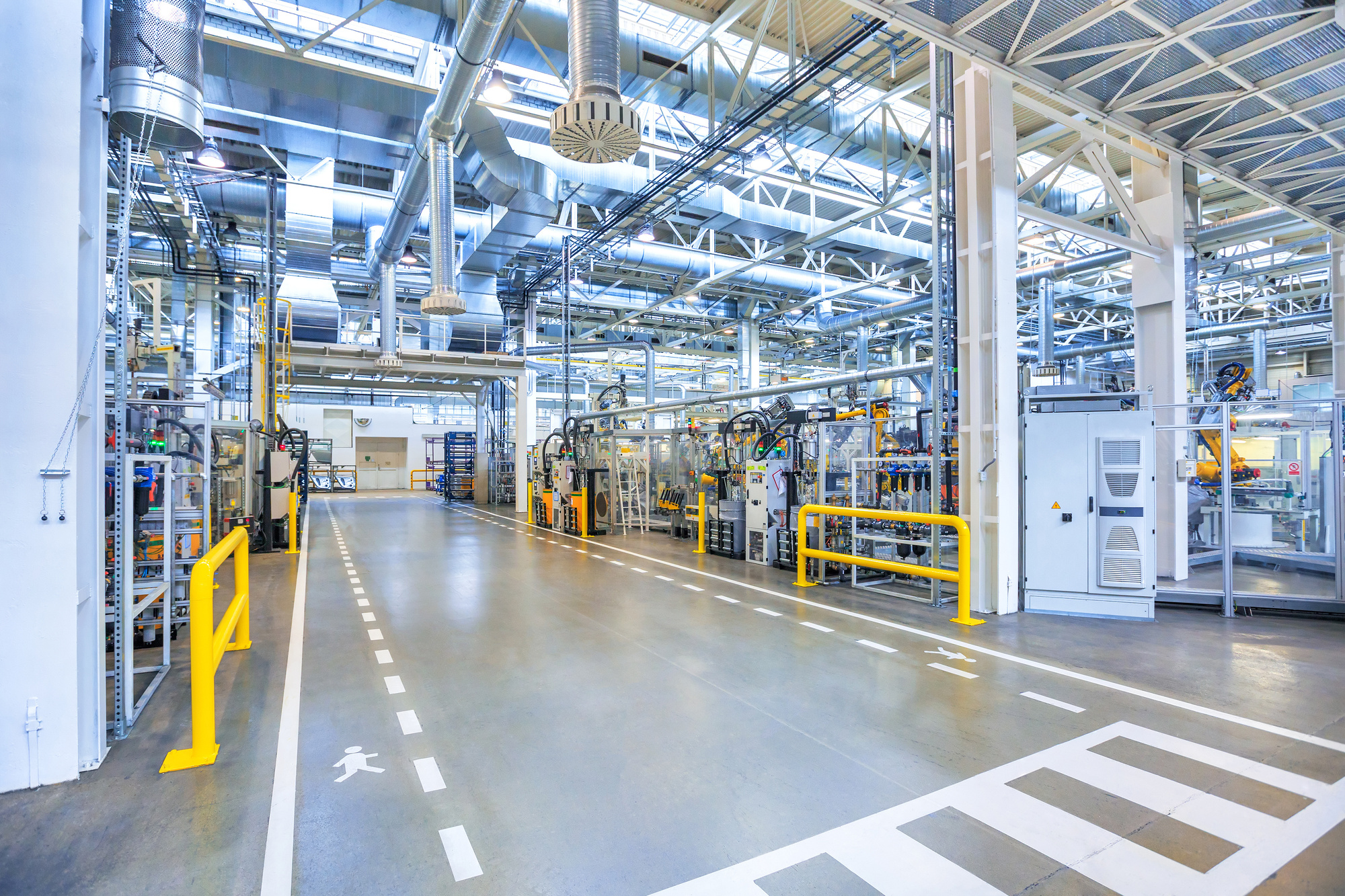
Industrial Manufacturing Background-1

1,300 hospitalisations per year

 HSE data records over 1,300 lift truck accidents resulting in hospitalisation every year in the UK. 
THE REGULATORY & FINANCIAL EXPOSURE


The HSE's Approved Code of Practice and guidance for lift trucks (L117), underpinned by the Provision and Use of Work Equipment Regulations 1998 (PUWER), sets clear duties on employers. Forklift truck incidents are among the most common triggers for HSE investigation and enforcement action.


Fee for Intervention (FFI) 
Where HSE inspectors identify a material breach, the fee for Intervention scheme charges the duty holder for all time spent identifying and resolving the breach. The current rate is £188 per hour (from April 2026) and charges cover the site visit, all associated investigation, notices and follow-up work. A full investigation can easily run to tens of thousands of pounds.


Court fines 
Under the Health and Safety at Work etc. Act 1974, courts can impose unlimited fines. Under sentencing guidelines introduced in 2016, large organisations face a starting point of £4 million and a range up to £10 million for the most serious breaches. 


Employer's liability claims 
Serious lift truck injuries such as crush injuries, amputations and fractures routinely generate significant employer's liability claims. 


Direct costs for major injuries frequently run to tens of thousands of pounds, with indirect costs including downtime, retraining, schedule disruption and increased insurance premiums multiplying the total several times over.

Benefits of forklift-free

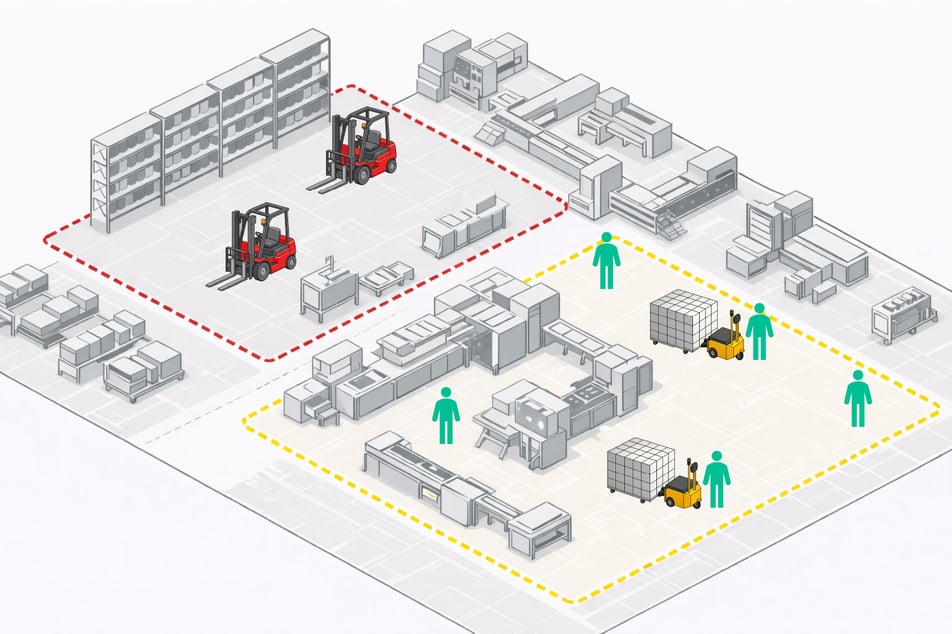
Separating lift from transport: The foundation of forklift-free operations


Forklift-Free Zones-01

The aim behind the forklift-free strategy is to separate lifting operations from general, standard load movement. Confining forklifts to defined lifting zones and redesigning horizontal movement around purpose-built equipment resolves the core risk without compromising operational performance.

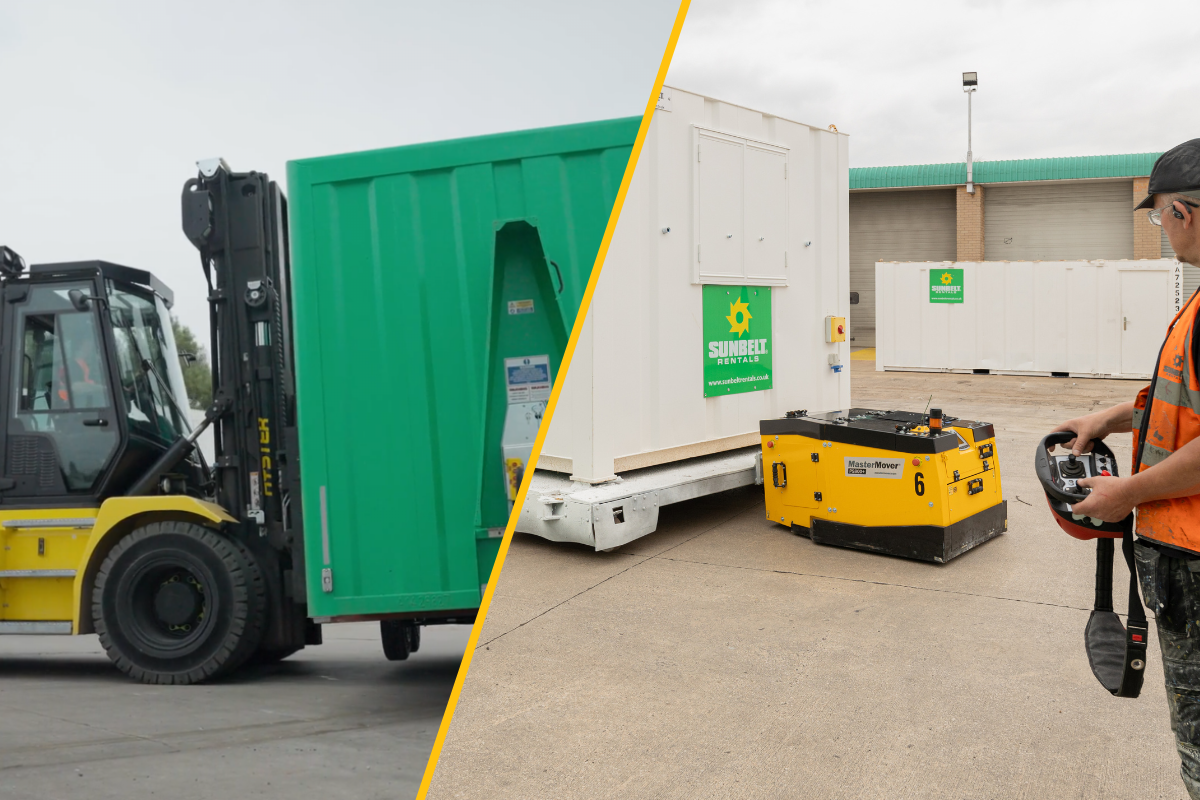
Electric tugs are designed to move heavy wheeled loads safely and efficiently. Loads stay on their own wheels at floor level and nothing is lifted. That single difference eliminates tip-over risk, reduces collision severity, and allows operators to work at walking speeds with clear visibility ahead of them. Remote control tugs are also available, like MasterMover's PowerSteered range, which offers even greater visibility and allows operators to move around the load and check blind spots.
WHAT ARE THE BENEFITS OF FORKLIFT-FREE OPERATIONS?


Forklift-free strategies deliver measurable gains across four key areas: safety, performance, flexibility and emissions reduction. Each improvement supports the next. Removing forklifts from the factory floor and introducing electric tug solutions reduces pedestrian risk and removes reliance on licensed operators.

Workplace safety

Eliminating forklifts from shared routes removes many of the conditions that lead to incidents. Elevated loads, limited visibility, reversing vehicles and close interaction with pedestrians in confined spaces all increase risk.


Organisations using forklift-free processes with MasterMover electric tugs report fewer near-misses and reductions in lost-time incidents linked to vehicle movement.
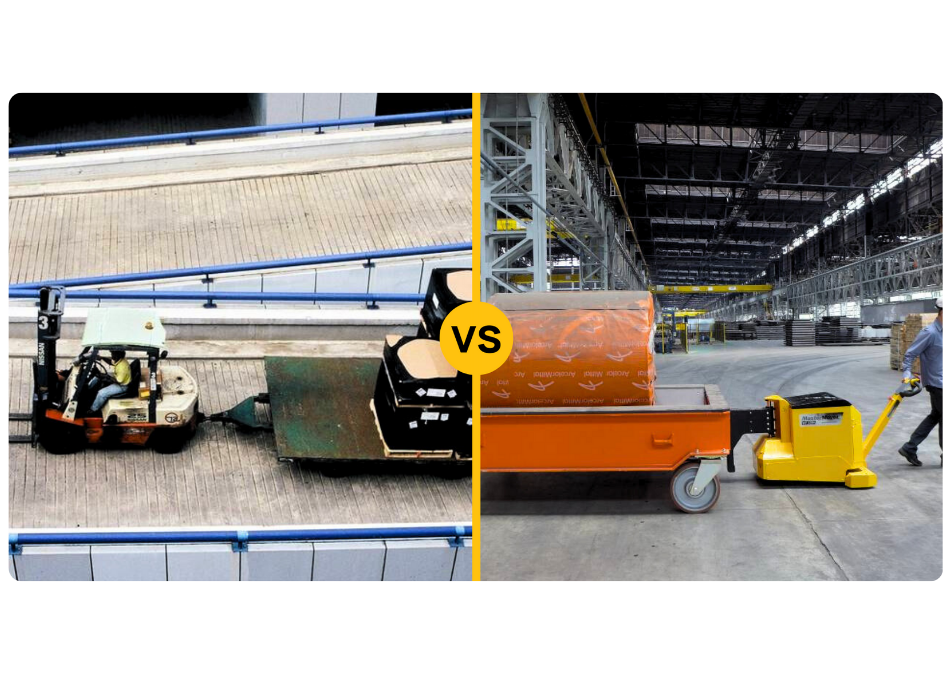

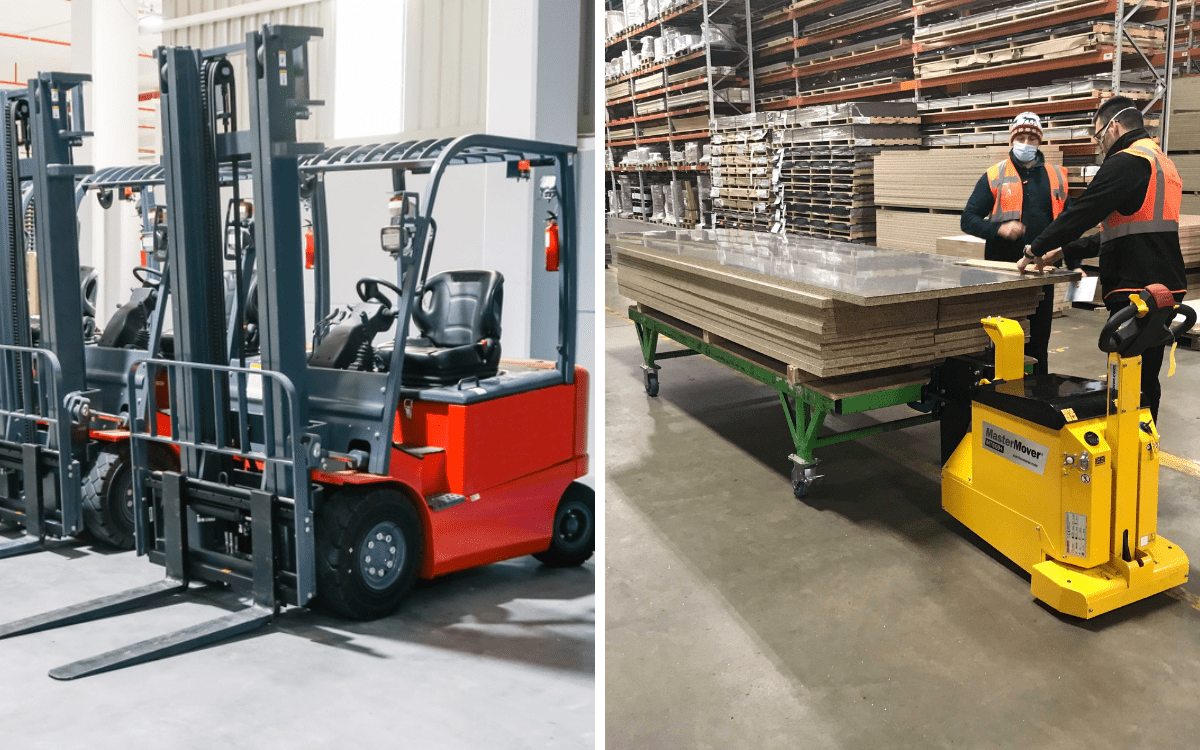
Forklifts vs electric tugs

With forklift trucks
With MasterMover electric tugs
Dependence on licensed operators creates bottlenecks and delays
Loads stay at floor level and operators move at walking pace
Lifted loads and limited visibility increase risk for pedestrians
Greater visibility improves safety for pedestrians
Transport and lifting tasks compete for the same resource
Controlled movement reduces the risk of collisions and damage
Inflexible, unsafe and inefficient for busy areas
Any operator can move heavy-wheeled loads, reducing downtime
Terex-MT1500-retouched-floor-450x299

SAFETY COMPARISON: FORKLIFT VS ELECTRIC TUG SOLUTIONS


The table below compares diesel and electric forklifts against pedestrian-operated electric tugs. The comparison covers several risk factors, licensing requirements and emissions. 

Electric tugs
Electric forklift
Diesel/LPG forklift
Pedestrian risk Low: operator walks beside load with direct sightlines and remote-control options offer even greater visibility High: limited sightlines and poor visibility High: limited sightlines and poor visibility
Tip-over risk None: ground-level movement only High: elevated centre of gravity High: elevated centre of gravity
Reversing hazards Low: remote control options keep operator ahead of direction of travel High: camera systems can mitigate High: camera systems can mitigate
Operator licensing Short onboarding and familiarisation training Formal certification required Formal certification required
Collision severity Low speed, controlled High mass, high speed impact potential High mass, high speed impact potential
Noise level Low Low High
Emissions (indoor) Zero at the point of use Low High: approx. 5,000-8,000g CO2/hr (MasterMover field sales data, 2024)
Maintenance costs Low Medium High

Implementation framework

THE FORKLIFT-FREE IMPLEMENTATION FRAMEWORK


Transitioning from operations reliant on forklift trucks is not simply a matter of replacing one solution with another.

Changing the way goods, loads and equipment are moved in your facility requires a systematic review of how materials move through a facility.

The next step is to redesign the processes that carry the greatest risk or opportunity for improvement.

The framework below reflects how MasterMover has supported many manufacturers through this transition across a wide range of industries.

1

Step 1: Assess

Where and why are forklifts being used?

Before any alternative equipment is considered, the assessment phase asks a more fundamental question: where are forklifts being used today, and are they being used because lifting is genuinely required, or because they are simply the most available option?

Start by mapping every material movement against two categories: vertical activity (stacking, racking, vehicle loading) and horizontal transport (moving loads from one point to another at floor level). In most facilities, a significant proportion of daily forklift journeys fall into the second category. Those movements are ideal candidates for redesign.
Overlay that map with incident and near-miss data.
Where do events cluster? On shared transit routes? In narrow aisles where visibility is limited? In areas requiring frequent reversing? The goal at this stage is to understand precisely where the risk sits and what is driving it.
Examine the facility layout. Is aisle width determined by forklift turning radius rather than operational requirements? Are loads moved individually when they could be consolidated? Are processes designed around the available vehicles rather than around the work?

Forklift dependency has often shaped facility layouts in ways that are invisible to the people working in them every day. Stepping back and assessing processes allows you to gain a top-level perspective that goes beyond the "we've always done it this way" approach.

2

Step 2: Redesign

If we were designing this process from scratch, what would we do?

Having assessed current processes, the redesign phase considers how each movement would work if the forklift were removed. For horizontal transport, the answer is typically a pedestrian-controlled or remote-controlled electric tug. For high-volume repetitive routes, a tug train using MasterMover's MasterTow range, or a ride-on towing tractor can replace multiple forklift journeys with a single, predictable movement solution.

Several factors determine the right specification of electric tug for a given application:

Movement frequency and distance
Load weight and trolley design
Operating environment – floor condition, slopes etc.
Movement requirements, size constraints
Connection/hitch system

Getting these factors right in the specification stage is what separates a solution that embeds successfully into daily operations from one that creates new frustrations. A reputable electric tug supplier should take a consultative approach to specification to ensure any solution is fit for purpose. At MasterMover, we follow a tried-and-tested evaluation process to understand your requirements.

As well as embedding the correct equipment, many businesses start with a pilot programme. Choose a zone representative of the broader problem i.e. high pedestrian and vehicle interaction, repetitive horizontal movement, measurable safety objectives, and define success criteria in advance. Pilot programmes reduce resistance by letting operators and leadership see the change in practice and they generate the evidence needed to build a credible business case for the next phase.

3

Step 3: Scale and embed

Making forklift-free design part of standard operations

A successful pilot provides operational proof and the confidence to extend forklift-free approaches further. Scaling works best when the redesigned processes are documented and standardised rather than left to individual interpretation on each deployment.

At this stage, align forklift-free implementation with formal safety KPIs. Track changes in near-miss frequency, lost-time incidents linked to vehicle movement, and congestion-related downtime. These metrics make the safety improvement legible beyond the shop floor and can be used to communicate improvements to boards, insurers and the HSE.

Case studies

REAL-WORLD EXAMPLES OF FORKLIFT-FREE PRINCIPLES IN PRACTICE


Businesses that have reworked material movement and reduced forklift usage in certain areas report significant improvements across both safety and efficiency.

These two case studies from MasterMover customers showcase outcomes at opposite ends of the load spectrum and illustrate the range of environments where forklift-free strategies can be successfully applied to achieve safety or operational objectives.

Sunbelt Rentals

300%

Increase in handling efficiency after replacing forklift movement with MasterMover electric tugs for trailer and cabin handling. Manpower requirements for the same volume of movements reduced by 75%.

Sunbelt PS800 Paint_Shop

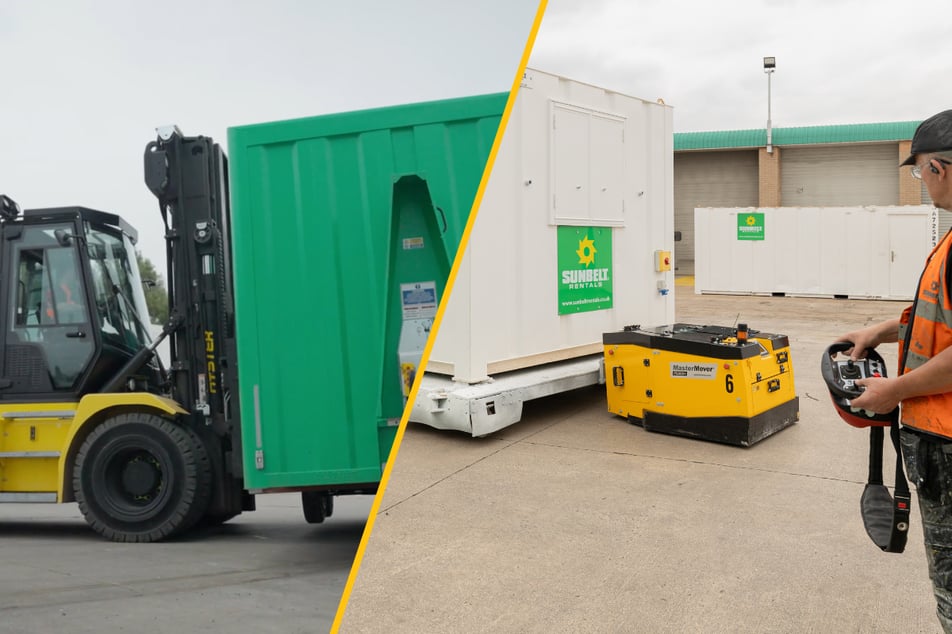
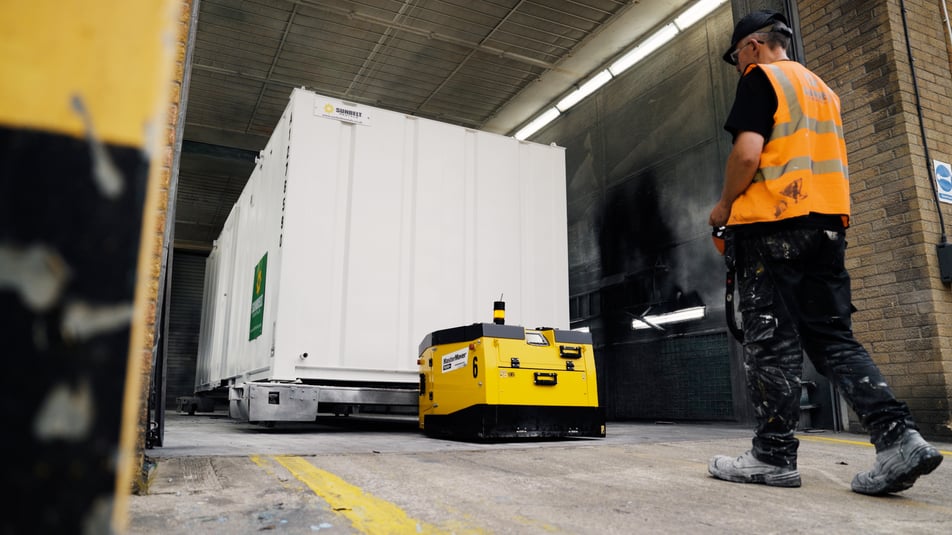
Sunbelt Rentals faced a problem of moving large portable accommodation units and plant equipment. Moving these loads required large forklifts capable of handling significant weights, but their use created persistent congestion and a continuous dependency on licensed operators. Whenever a movement was needed and no licensed driver was immediately available, equipment sat waiting, throughput slowed and the risk of incidents was high.

By replacing forklift-based movement with MasterMover electric tug solutions for trailer and cabin handling, Sunbelt achieved a 300% increase in efficiency.

Manpower requirements for the same volume of movements fell by 75%. Operators no longer needed a forklift license to carry out routine transport tasks, which meant that movements could happen when the work required rather than when a licensed driver became free. This reduced downtime and enabled cabins to move through the refurbishment process much quicker, improving output and enabling more equipment be issued out on hire.

Terex Materials Processing

18,000kg

Single-operator load capacity using MasterMover remote-controlled tugs, replacing large counterbalance forklifts in a busy production environment. Forklift traffic on the shop floor reduced substantially, reducing risk.

PS30000 Terex (2)

At Terex Materials Processing, heavy sub-assemblies needed to be repositioned repeatedly on the production floor during manufacture. Previously this required huge counterbalance forklifts, machines that dominated the available space and created significant visibility problems for both operators and the people working alongside them on the production line.

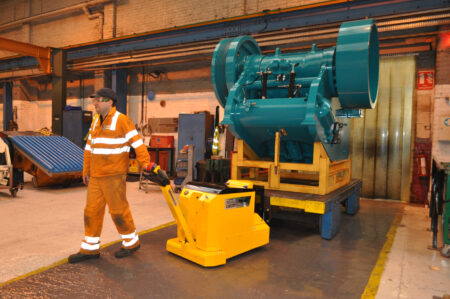
Now, MasterMover PS3000+ remote controlled tugs are used to move the sub-assemblies on the shopfloor. With the remote control solution, the operator works safely from beside the load, rather than elevated in a forklift truck cab with obstructed sight lines. Using the PS3000+ electric tug, a single operator at Terex can now safely move 16m chassis weighing 18,500kg.

Since implementing the MasterMover tugs, forklift traffic on the shop floor has reduced substantially. Pedestrian routes that were previously compromised by large, maneuvering forklifts have been reclaimed, making the working area much safer. The operators who manage the process consistently describe the change in control and visibility as significant.

Addressing common concerns with forklift-free strategies

COMMON OBJECTIONS FROM THE SHOP FLOOR


Forklift-free transitions involve just as much change management as much as equipment change. In over 28+ years of experience supporting manufacturers in this transition, we’re familiar with the common objections and misconceptions surrounding implementing forklift-free strategies.

"We've always done it this way."

In most facilities that have not suffered a serious forklift incident, the absence of injury is attributed to good practice. Occasionally that is accurate. But more often, it reflects the reality that serious incidents are relatively rare even in genuinely high-risk environments. Near-miss data usually tells a very different story. When sites begin formally recording and analyzing near-miss events involving forklifts, the frequency of close calls in forklift and pedestrian interaction areas almost always comes as a surprise to those reviewing it.

"Electric tugs can't handle our loads."

MasterMover electric tug solutions can move loads from a few hundred kilograms right up to 300,000kg. The MultiLink system allows multiple machines to operate in unison. This enables synchronised movement of loads and increases the weight that can be moved. Weight capacity is very rarely a limiting factor. 

"We'd lose speed and efficiency."

In most facilities, the throughput calculation of swapping forklifts with electric tugs consistently favors the change. Waiting time for licensed operators disappears. Congestion in transit areas reduces. Movements become more predictable. Where a forklift made one journey per load, an electric tug can move a train of trolleys and move multiple loads in one trip. Electric tugs are also able to steer, position and manoeuvre loads in ways that forklifts simply can’t.

This improved manoeuvrability removes the previously time-consuming shunting process familiar to most forklift operators and cuts handling time. 

Building a business case

THE BUSINESS CASE FOR FORK-LIFT FREE


The business case for segregating forklift trucks from busy areas sits across several stakeholder groups - safety compliance, operational performance and financial risk management. Each stakeholder group needs a different version of the business case, framed in a way that resonates.

MasterMover's forklift-free implementation framework is designed to generate the evidence that feeds all three of these conversations simultaneously. Safety improvements, throughput data and cost data can be assembled into a single business case that speaks convincingly to multiple stakeholders.

The strongest internal business cases present safety improvement and operational gain as a single story, not as separate justifications competing for the same budget.

How do forklift-free strategies align with Safety Manager objectives?

In most facilities that have not suffered a serious forklift incident, the absence of injury is attributed to good practice. Occasionally that is accurate. More often, it reflects the statistical reality that serious incidents are relatively rare even in genuinely high-risk environments.

 Near-miss data usually tells a different story. When sites begin formally recording and analysing near-miss events, the frequency of close calls in forklift and pedestrian interaction zones almost always comes as a surprise to those reviewing it. 

How do industrial electric tugs compare to forklifts for Operations Managers?

For operations leaders, the gains in throughput, flexibility and reduced congestion are the primary gains. The dependency on licensed operators is one of the most underestimated constraints in manufacturing facilities.

When a licensed driver is unavailable, work stops. Removing that dependency has measurable value on the production schedule.

What's the impact of reducing forklift reliance for Finance stakeholders?

For finance stakeholders, the focus is liability, insurance costs and sustainability. Workers’ compensation for a forklift injury can be in the tens of thousands of pounds per claim, while severe incidents can easily reach six figures. 

Indirect costs (including downtime, retraining and higher premiums) can multiply the total several times.

Moving towards forklift-free operations

Forklift-free operations start by asking a simple question: is your equipment there by design, or just because it’s always been there? In many facilities, forklifts weren’t planned, they were added over time because they were familiar. This creates real, measurable risks. With the right approach, these risks can be fully managed. This playbook is designed to help make the transition straightforward and effective.

MasterMover has supported manufacturers across many industries in moving to forklift-free operations. The lessons learned, what works, what challenges arise, and how to overcome them are built into every stage of this approach.

28+ years of experience

Supporting manufacturers with forklift-free transitions across a wide range of industries.

Single-unit capacity up to 70,000kg

MasterMover electric tugs scale to match the demands of any facility.

Zero licensed operator dependency

Any trained member of staff can operate an electric tug.

Take the next step towards a safer, smarter factory floor

By redesigning load movement with electric tugs systems, facilities reduce injury risk and improve throughput. Get in touch to see how electric tugs can help transform your operations.

How we might use your information
We may contact you by phone or email, if you have not opted out, or where we are otherwise permitted by law, to provide you with marketing communications about similar goods and services. The legal basis that allows us to use your information is ‘legitimate interests’. More information about how we use your personal data can be found in our Privacy Policy.

FAQs - Frequently asked questions

What is the difference between a forklift and an electric tug machine?

A forklift lifts loads off the ground using a mast and forks, creating a high centre of gravity. A forklift is designed to lift palletised loads, for example onto racking, loading docks or within warehouses. An electric tug moves wheeled loads that remain safely on the ground. The operator walks alongside the machine or uses a remote control, maintaining clear visibility ahead of the load. Loads are never elevated during movement, which reduces the risk of tip-overs and injury of severity.

Can electric tugs handle the same loads as forklifts?

For horizontal transport, yes, if the load is on wheels. MasterMover electric tugs can move loads ranging from a few hundred kilograms to as much as 300,000kg. For applications that exceed single-unit capacity, MasterMover’s unique MultiLink system allows multiple units to operate in synchronised teams, scaling to virtually any load weight.

How long does it take to implement a forklift-free strategy?

Most organisations begin with a pilot program in a defined zone. This is typically an area with frequent interaction between pedestrians and vehicles. A well-scoped pilot can be operational within weeks and generates the data needed to build a business case for broader rollout. Full facility transitions are often staged across months rather than completed in a single phase, but forklift-free rollouts can be done at a pace most appropriate to your business.


What industries use forklift-free operations?

Forklift-free strategies are applied across a range of industries, including automotive, aerospace, heavy plant assembly and industrial manufacturing. The approach is relevant wherever facilities use forklifts for routine horizontal transport in spaces shared with pedestrians, which describes most manufacturing and production environments.

What is the return on investment for switching to electric tugs?

The ROI case for swapping forklift trucks for electric tug machines draws from several sources simultaneously. For example:

  • Reduced workers' compensation exposure (including direct and indirect costs)

  • Improved throughput

  • Reduced congestion

  • Lower fleet operating costs

Organisations that have made the transition report gains across all these areas, with safety improvements and operational gains being the most significant.


What happens to forklifts after a forklift-free transition?

Once the integration and rollout of solutions like electric tugs are complete, forklifts can be redeployed to the tasks they were originally designed for. Lifting tasks, racking operations and vehicle loading remain forklift functions. The transition reduces the total number of forklift movements and concentrates them in defined zones, which makes these areas easier to manage for safety compliance.

References

  1. HSE — Lift Trucks (1 in 4 / general lift truck risk) https://www.hse.gov.uk/workplacetransport/lift-trucks/index.htm
  2. HSE — Managing Lift Trucks (supporting context) https://www.hse.gov.uk/workplacetransport/lift-trucks/managing-lift-trucks.htm
  3. HSE — Rider-operated lift trucks: L117 ACOP (regulatory framework) https://www.hse.gov.uk/pubns/books/l117.htm
  4. National Forklift Safety Day — 43% / 65% pedestrian RIDDOR data https://nationalforkliftsafetyday.co.uk/2020-pedestrian-impact/
  5. HSE — Fee for Intervention current rates (£188/hr from April 2026) https://www.hse.gov.uk/enforce/charging/rates.htm
  6. HSE — Work-related fatal injuries in Great Britain 2025 https://www.hse.gov.uk/statistics/fatals-overview.htm
  7. HSE — Non-fatal injuries at work in Great Britain https://www.hse.gov.uk/statistics/causinj/overview.htm
  8. OSHA https://www.osha.gov/etools/powered-industrial-trucks