United Kingdom
 Deutschland
 France
 Belgium
 Bulgaria
 Česká Republika
 Croatia
 Denmark
 España
 Finland
 Greece
 Hungary
 Iceland
 Ireland
 Italia
 Kazakhstan
 Latvia
 Lithuania
 Luxembourg
 Malta
Malta
 Nederland
 Norway
 Österreich
 Polska
 Portugal
 Romania
 Schweiz
 Slovakia
 Slovenia
 Sweden
 United States
 Canada
 Argentina
 Brasil
 Chile
Chile
 Colombia
 Costa Rica
 Cuba
Cuba
 Dominican Republic
 Ecuador
 El Salvador
 Guatemala
 Jamaica
 México
.svg.png?width=24&name=Flag_of_Peru_(state).svg.png) Peru
Peru
 Trinidad and Tobago
.png?width=24&name=Flag_of_Uruguay_(1828-1830).png) Uruguay
Uruguay
 Australia
 中国
中国
 中国香港
中国香港
 India
India
 Indonesia
 日本
日本
 대한민국
대한민국
 Malaysia
 New Zealand
 Pakistan
 Philippines
 Qatar
Qatar
 Saudi Arabia
 Singapore
 Taiwan
 Thailand
 Türkiye
 UAE
UAE
 Vietnam
 Algeria
 Egypt
Egypt
 Kenya
Kenya
 Mauritius
 Morocco
 South Africa
 Tunisia


Electric tuggers can deliver ROI in as little as 6.4 months by cutting material-handling headcount by up to 60%, reducing forklift-related safety incidents, and removing the ongoing costs of running a forklift fleet (training, certification, insurance, and rental or replacement capex). Switching from a multi-person forklift crew to a single-operator tugger setup also reduces handling time and equipment maintenance spend.
Forklifts feel like a fixed cost until you total up what it actually takes to run them safely. Multiple forklift operators, dedicated spotters, ongoing certification, fuel or charging, maintenance, time wasted waiting for licensed driver availability, and the ever-present risk of damage to assets or equipment all add up to a labor and liability bill that was severely under-budgeted.
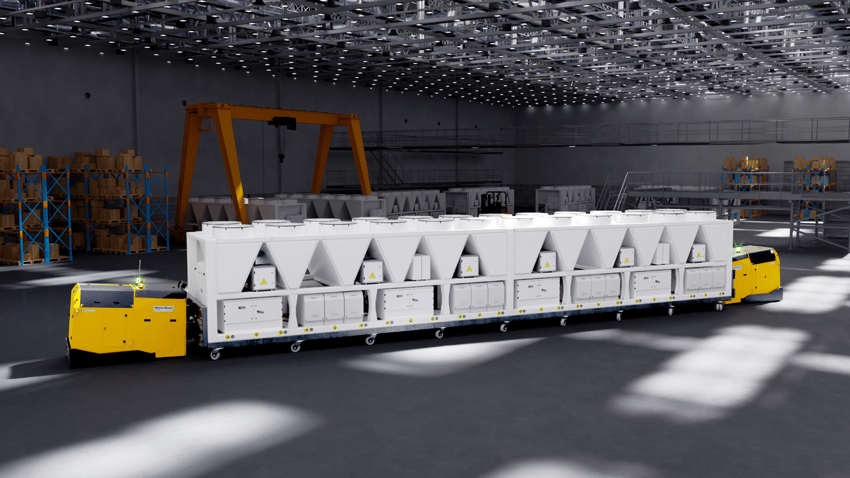
Electric tuggers, like our PowerSteered range, are increasingly replacing forklifts for moving heavy loads on wheels, such as data center infrastructure enclosures, by allowing a single operator to safely move up to 660,000 lbs. The question then is around whether it actually pays back and how fast.
Read on for a composite example based on a real-world material handling conversion project, as well as a breakdown you can apply to your own operations.
Why forklift crews cost more than you think
Most ROI conversions are just based on the fact that ‘the tugger costs less than the forklift’. But there’s even more to it; there are many hidden costs of using forklifts, and the biggest lies in the manpower requirement.
Moving heavy enclosures or loaded dollies with forklifts typically isn’t a one-person job and usually requires:
-
Multiple forklifts to shunt the load
- A certified forklift operator per vehicle
- Dedicated spotters for visibility and collision avoidance
- Overlapping shift coverage of licensed drivers to keep operations running
In the case example below, this means three forklift operators plus two spotters to manage the movement of a single enclosure at any time – an entire crew of people to move an enclosure between production stages that could otherwise be freed up to focus on the assembly work that actually delivers throughput.
On top of time spent handling loads, time and money is also needed for training and certifying forklift operators. These costs aren’t one-offs, operators require refresher training in order for operations to remain compliant and any new staff would need initial training as teams evolve.
Safety and incident risk are also prevalent factors. OSHA estimates that forklifts are involved in around 35,000 serious injuries and 62,000 non-serious injuries every year, citing that 70% of forklift accidents could be prevented with better training and equipment choices.
Insurance and liability costs tend to rise alongside fleet size, since facilities running larger forklift fleets typically carry higher liability premiums, and workplace incident claims can affect rates for years afterwards.
Since forklifts need wide turning circles and clear sightlines, congestion and downtime are common side effects as well. This often means that aisles, loading bays, and shared walkways become bottlenecks that slow nearby working down as well as the forklift team. Hidden damage costs are easy to underbudget for but scraped racking, dented walls, and damaged equipment all contribute to costly rework later down the line.
Reducing manpower with MasterMover electric tugs
| Before Forklifts + crew |
After Electric tugger + single operator |
Change | |
| Crew size | 5 people | 2 people | -60% |
| Annual burdened labor cost | $520,000 | $208,000 | -$312,000 |
Electric tugger ROI: numbers as a base case
| Initial investment | Annual labor savings | Simple annual ROI | Simple payback |
| $350,000 | $312,000 | 89.1% | 13.5 months |
| 5-year gross labor savings | 5-year net benefit after equipment |
| $1,560,000 | $1,210,000 |
Factoring in forklift costs
| Already owned | Rent 3 forklifts | Buy 3 used | Buy 3 new | |
| Annual cost / avoided cost | $0 | $120,000 | $110,000 capex | $345,000 capex |
| Total annual savings | $312,000 | $431,000 | $312,000 | $657,000 |
| Payback period | 13.5 months | 9.7 months | 9.2 months | 6.4 months |
The takeaway for capital planning teams: if forklift replacement or rental is already on the cards, an electric tugger investment is only competing against a forklift investment that comes with a much bigger spend of hidden costs and a longer payback.
A full ROI case should also account for savings that are harder to quantify but still affect the P&L:
-
Fewer forklifts in tight spaces means less risk of damage to equipment and facilities
- Reduced risk of damage means reduced exposure to costly rework
- Easier load movement boosts efficiency and throughput
How to calculate electric tugger ROI
The framework behind this case example is simple to replicate for your own operations:
-
Calculate current burdened labor cost (crew size × hourly burdened rate × weekly hours × 52 weeks)
- Calculate projected labor cost with a reduced tugger-based crew using the same rate and hours
- Subtract the two to get annual labor savings
- Divide the equipment investment by annual labor savings for a simple payback period
- Layer in forklift acquisition costs (rental, replacement, or resale of existing units) to see the accelerated payback scenario
Making the case for electric tuggers
The headline figures in this example are compelling on their own, but the full case for switching from forklift trucks to electric tuggers goes beyond this.
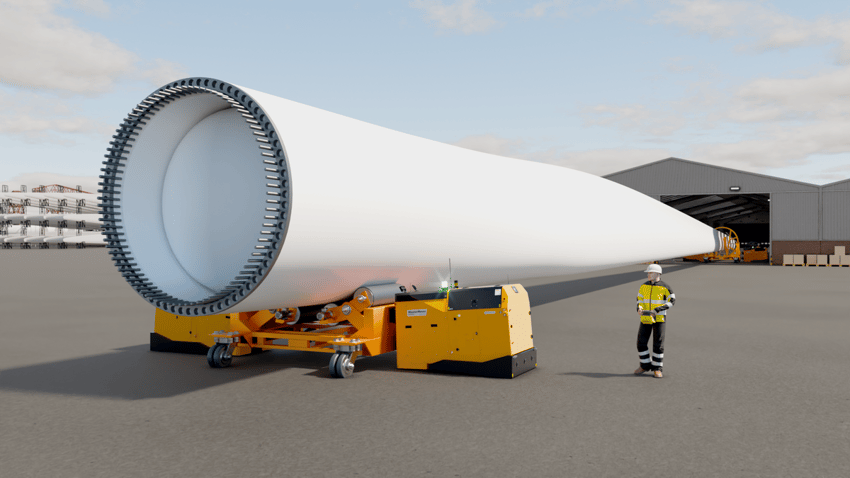
Forklift-based material handling comes with a layered cost structure involving crew size, training & certification, insurance, safety incidents, damage to facilities or equipment, and operational downtime which all compound on top of the equipment cost itself. Electric tuggers like our PowerSteered series with MultiLink configurations are designed to remove many of those cost drivers at once to change the underlying labor and risk profile.
For environments with additional constraints, such as data center infrastructure manufacturing, the case can be even stronger with tighter tolerances for damage and uptime, making the precision control of a single-operator system especially valuable.
The best way to know what this means for your own site is to run the numbers using your own crew size, labor rates, and forklift costs following our simple 5-step framework used above.